You know the old adage – fast, good, cheap: pick two?
I’ve learned that for website redesigns, there’s a corollary.
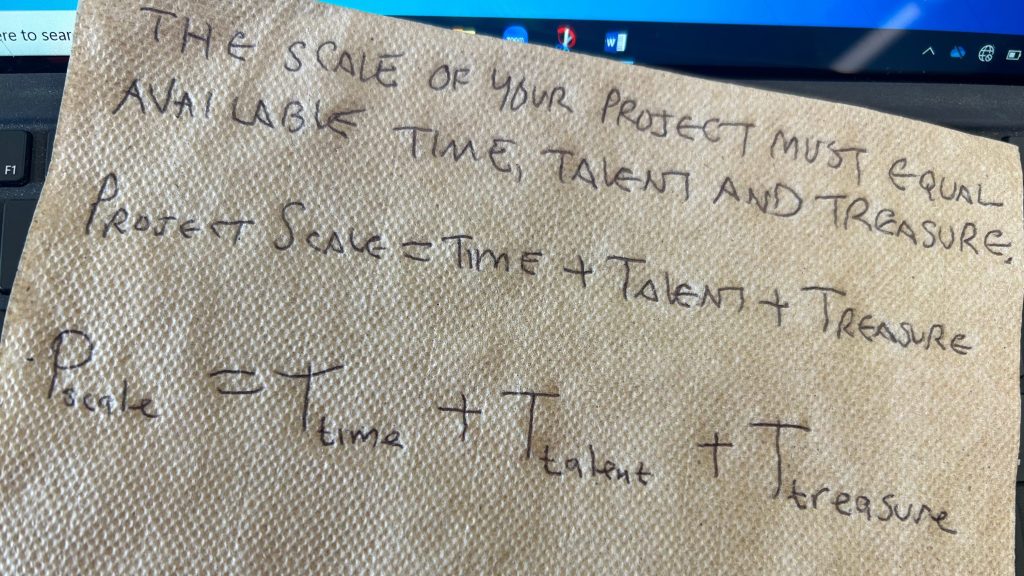
And if I were so bold as to put it into a math formula, it’d look like this:
P(s) = T1 + T2 + T3
The scale of your project P(s) must equal the amount of time T(1), talent T(2), and treasure T(3) you can allot to it.
Author’s note: I’m not a mathematician. As a matter of fact, astute readers will remember that I am banned from operating simple machines in certain parts of Indiana (read my Newton article here). Even so, my high school algebra teacher Sister Mary Gregory would be so proud! (God rest her sweet soul).
Basically, outputs have to equal inputs.
Seems pretty obvious, right?
Then why do so many of my colleagues – many of whom are incredibly creative and talented – have such a hard time with website relaunches?
I think it’s because we don’t make new websites every year the way we plan budgets, run campaigns, and do all our other work. What’s more, small shops don’t have the luxury of staff solely focused on maintaining the site. They might have one person tasked with creating content for the whole college, running multiple social accounts … oh, and managing the website.
Developing deep expertise and staying current with trends and technology? Who’s got time for that?
It’s no wonder then that most of us know our website but we don’t know our website.
Case in Point
About a year ago I wrapped up a website redesign project that went embarrassingly slow. Pretty much every kind of plague struck us at some point during the project – a shoestring budget, pandemic recovery, internal staffing changes and vendor rep turnover, new and unexpected projects and priorities, and near-zero momentum to keep us on track whenever we hit a roadblock.
This thing kicked my professional backside.
So what happened?
In hindsight, it’s obvious: I naively went into this project woefully under-resourced and without a real plan.
It was a dumpster fire and I was the one who lit the match.
So, dear reader, in an effort to turn my pain into your gain, here’s an amateur website redesign checklist of things to consider before you start:
Project
Websites are complex. And strangely, websites that are simplest to use are often extremely complex on the back end. That’s because the builders put in the hard work of figuring it all out ahead of time so that the end user doesn’t have to.
- Intuitive nav? Thank the U/X team.
- Engaging content? High-five the copywriter.
- Fast load time and no wonky formatting? Yay for the developer!
Sites like that don’t just happen. They require a lot of intentional effort by talented people.
As you start, take time to research your current site:
- What do you want it to do?
- What works well that you can carry forward?
- What shortcomings absolutely need fixed?
- What are your non-negotiables?
- What are the nice-to-haves?
Your next step is to quantify what you’ll need to tackle your list. The more realistic your numbers, the better.
Resources
As I so smartly proclaimed in my epic intro, any successful project requires three inputs: time, talent, and treasure.
How much do you have of each?
It doesn’t matter the proportions. Compare that to your project. Do they match up?
- Healthy budget and strong team? Partner with a top-tier firm and build the model site we all dream about.
- Budget tight? Rely on in-house talent, outsource only what you can’t handle.
- Light on talent? Make sure your vendor or freelancer fills the gaps.
- Short on time? Don’t kid yourself. Either take something else off your plate or lean on a vendor.
A wise administrative assistant once told me, “Sure I can do that project. What will you take off my plate so I have time to do it?”
That honesty stuck with me. If every project is the most important, none of them are important.
Balance the Scales
If your web project still requires more than you can put into it, you’re left with two options: scale back or find more resources.
This is where your early discovery and planning matter.
- Cut the nice-to-haves.
- Consider a refresh instead of a full redesign.
- Try a phased approach, structured so phase two builds off phase one.
- Go back to your budget. Can you reallocate or make the case for more?
As your college’s digital front door, your website is your number one marketing tool. Redesigns don’t happen all the time for a reason: they’re huge undertakings.
Even though redesigns are rarely fun, they demand your A-game. But if you balance your resources with the project, they don’t have to be (too) painful.
Epilogue
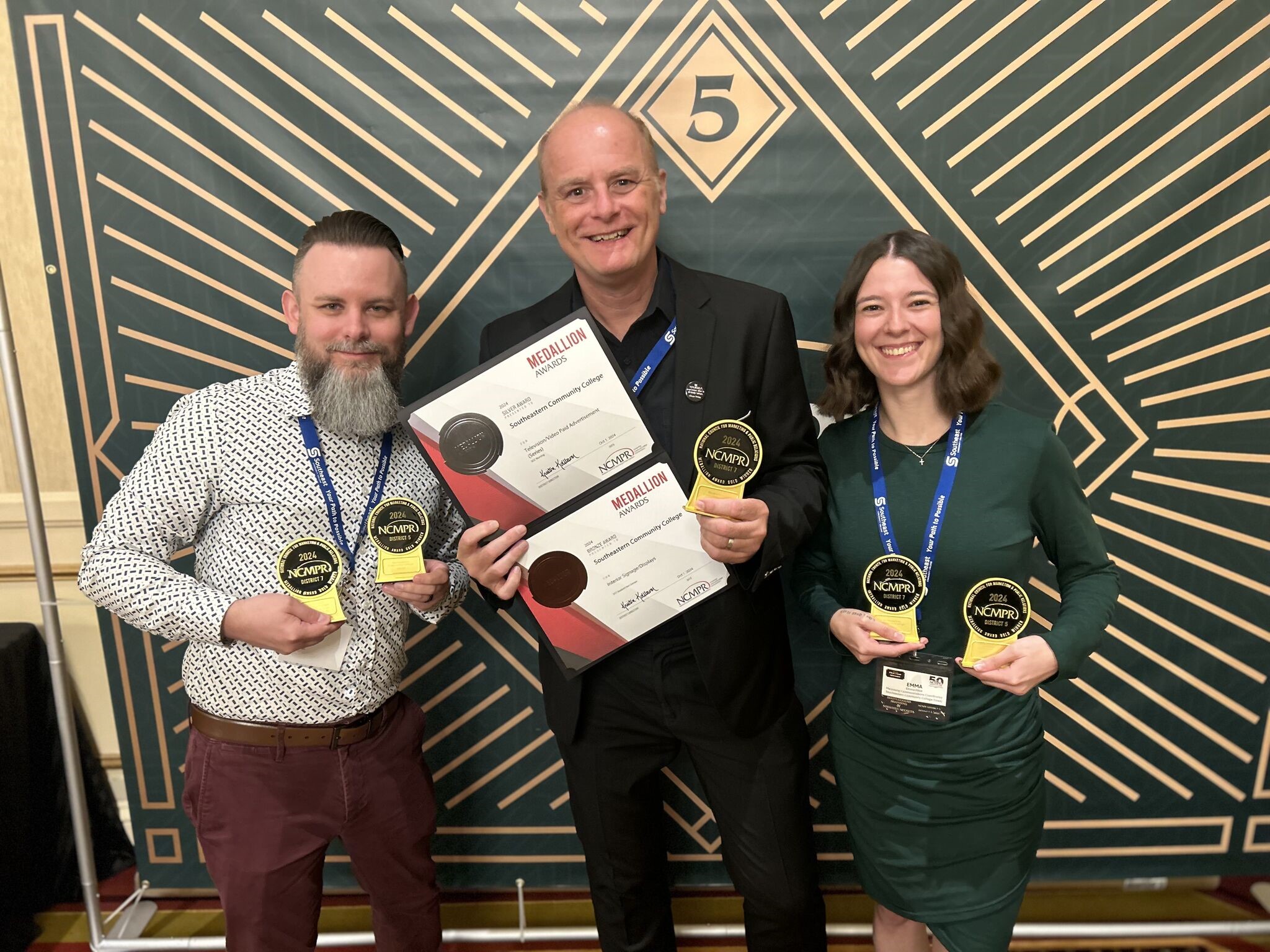
Our new website won a District 5 Gold Medallion this year. I cannot tell you how validating and cathartic it was to hoist that trophy with my team.
The dragon was slayed. Confidence restored.


 Jeff Ebbing, Higher Ed Marketing Guy