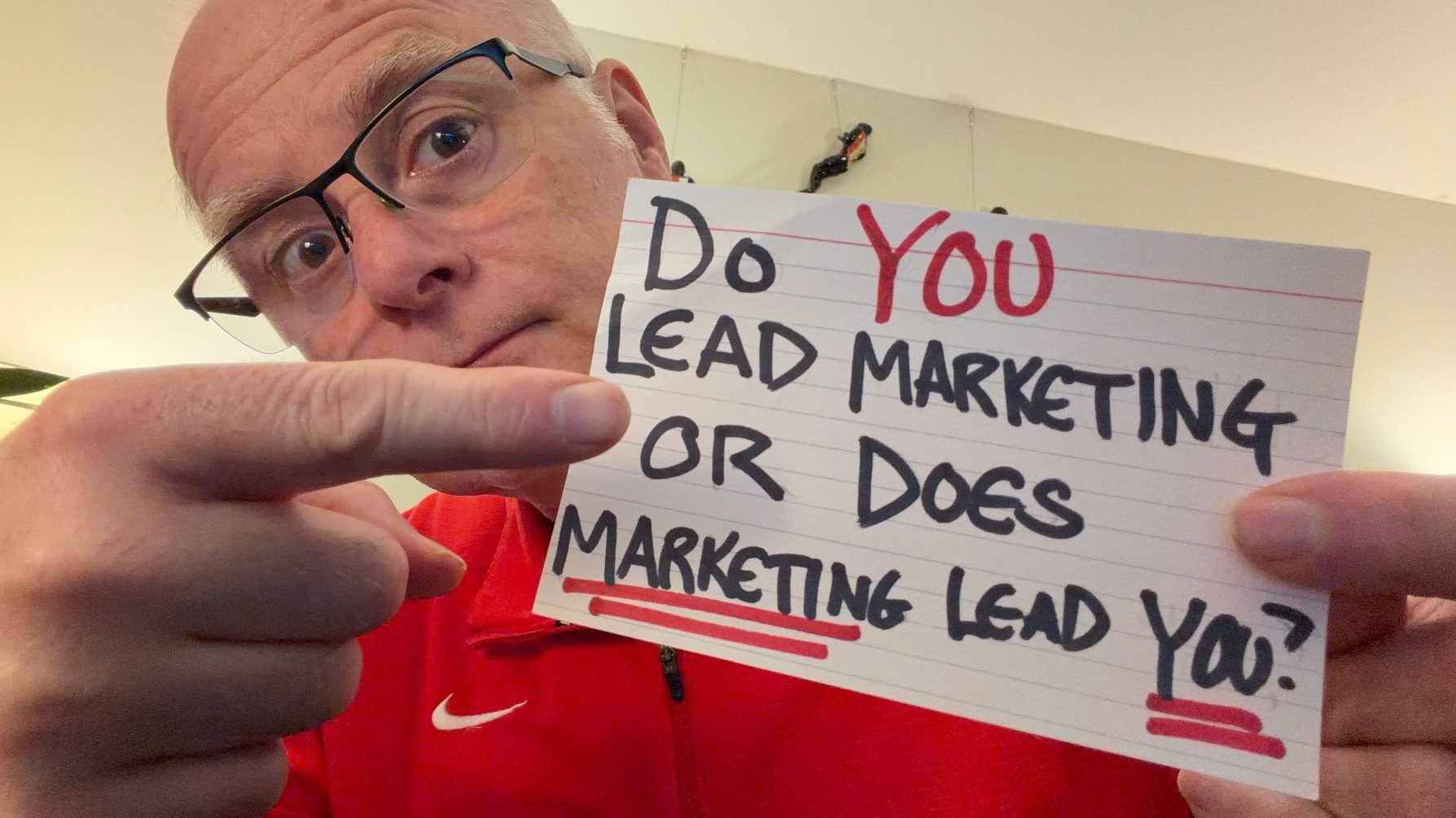
One of the biggest frustrations higher ed marketers struggle with every day can be traced back to a very simple explanation.
This job was never designed to be strategic.
Don’t believe me? Read your job description.
Go ahead. I’ll wait.
As I was scrolling LinkedIn a while back, I came across a post that suggests reviewing your job description every year.
Being about 20 years late to this great tip, I dug deep into my computer.
Like really deep.
In a long-forgotten backup folder was my original job description from 2005.
I opened it up curious to see just how different it was from my job now. I mean, other than social media and digital advertising, how different could it possibly be?
Welp.
You could replace “marketing director” with “photocopy specialist” without a noticeable change in scope.
- Write the press release.
- Design the brochure.
- Plan the event.
- Manage the website.
At the time, it was a big leap to integrate marcomms practices into recruitment and advancement where none had existed before.
However, the role was structured to promote decisions made elsewhere.
Not to influence them.
And even with all the work we do, I’d be willing to bet it’s still not much of a stretch from how your institution operates right now, too.
We Got a Seat At the Table (Sorta)
After having to wrangle with the fallout from leadership decisions’ unintended consequences over the years, we slowly resigned ourselves to stop putting lipstick on pigs and start sticking our noses into meetings to stave off uninformed and sloppy thinking.
Marcomms leads could see the holes in leadership planning where the subsequent decisions could go south.
Hey. Leadership didn’t know what they didn’t know.
So we showed up with receipts and opinions and started telling them.
And you know what? They listened. We proved our value again and again, and we finally got a seat at the table.
Huzzah! Progress!
We set to start sharing our perspective and applying our expertise.
Happy to be finally at the table, it took us a while to realize that we didn’t get invited until after the main course.
- Strategy has already been set.
- Programs have already been approved.
- Budgets have already been allocated.
The most important decisions are already made.
Basically, marcomms is here for dessert.
We’re there to talk about the fun stuff:
- The creative work.
- The messaging.
- The communications rollout.
Even though we’re paddling like hell to get upstream, at the end of the day many of us are still stuck creating the 2026 equivalent of snappy copy and cool logos.
The Problem Is the Environment Has Changed
Higher education no longer operates in the environment these roles were built for.
Institutions are now navigating multiple pressures at once. Shifting demographics, financial strain, political scrutiny, and growing skepticism about the value of college. These forces are converging and forcing institutions to make harder choices about strategy, priorities, and positioning.
In that environment, marketing can’t just be promotional. We’re literally leaving the other three Ps squarely unaddressed.
We’re uniquely situated to make a much stronger impact. At the intersection between the institution and the public, we see the signals first.
- Prospective students who stop halfway through the application.
- Families who can’t figure out how programs actually work.
- Messaging that sounds good but doesn’t resonate.
But observing signals isn’t enough.
Strategic marketing leadership means turning signals into decisions, decisions into action, and action into learning.
That requires marcomms leaders to operate differently than the role was originally designed.
And that gap explains why so many talented marcomms leaders feel stuck. We’re trying to do strategic work inside systems built for tactical support.
Change is A-Comin’
Despite the structure, the role of marketing in higher education is evolving. While flagship institutions commonly employ highly-engaged CMOs, smaller schools still lag behind.
Regardless of institution, the best marcomms leaders are no longer just promoting decisions. They’re helping leadership interpret what the market is telling them.
- Pointing out where prospective students get confused.
- Identifying which programs generate interest.
- Pinpointing where institutional messaging breaks down.
That perspective is often what’s missing. And marcomms leaders have it in spades.
Making that shift requires marcomms leaders to operate differently than most of us were trained.
Five Ways Marcomms Leaders Can Start Breaking the Ceiling
You can’t redesign your institution overnight but you can start operating differently inside it.
1. Bring Signals, Not Just Requests
Most marcomms reports focus on activity but strategic conversations start with patterns.
- What are prospective students confused about?
- Where are we losing them in the funnel?
- Which messages actually resonate?
Marketing often sees the consequences of institutional decisions first.
Use that perspective.
2. Move Conversations Earlier
If marketing is only involved in promotion, the strategic moment has already passed.
The real questions happen earlier:
- Who are we trying to reach?
- What problem does this initiative solve?
- What outcome are we trying to influence?
The earlier marketing enters the conversation, the more strategic our contribution becomes.
3. Protect Strategic Capacity
Every marketing team faces a constant flow of requests.
Left unmanaged, those requests consume the entire function. Strategy requires space to think, diagnose, and prioritize.
If every request receives immediate attention, strategic work dies before it can ever take root.
Make and guard space for the right work.
4. Reduce Institutional Complexity
Higher education is complicated: programs, credentials, financial aid, application processes.
Students experience that complexity as uncertainty. So one of the most strategic contributions marketing can make today is reducing that confusion.
Clarity isn’t just snappy copy. It’s simplicity as risk reduction.
5. Build Influence Before You Have Authority
Strategic influence doesn’t happen overnight. It grows through credibility.
- Bring evidence.
- Bring patterns.
- Bring insight about how audiences actually experience the institution.
Over time, leaders begin to rely on that perspective.
Cash in those receipts to move from service provider to strategic partner.
The Real Opportunity
Most marketing leaders aren’t stuck because the work is too hard. We’re stuck because the role was never designed to be strategic.
We’ve got the chops, we just lack a roadmap for how to do it inside the reality of a college.
How do we successfully manage competing priorities with limited resources and stave off the constant low-impact requests – while transforming our job from the inside out?
Learning to navigate those realities is now the work. And marcomms leaders who figure it out will be able to deliver the impact our institutions need from us.
Want to build real influence and take back control of your job function?
Set yourself up for marcomms success. Build skills to add to your toolbox and be ready to kick ass this fall. Sign up for my 6-week accelerator program.
Hot & fresh and just for you
Sign up for Try This By Friday. It’s a weekly newsletter for marcomms leaders. One real story, one practical tip, one thing you can actually roll out this week.
No theory. No content written by someone who’s never managed a team on a tight budget.
Just the stuff I’m actually learning, testing, and using, written for people doing the same job as me.
